Repairs · Burlington
Garage Door Tune-Up
On windy nights the door rattles in its frame, there is a line of daylight along one side, and the bottom seal has gone hard and flat. Leaves and fine snow drift in underneath and the garage never seems to hold its temperature.
Garage Door Tune-Up
In plain words
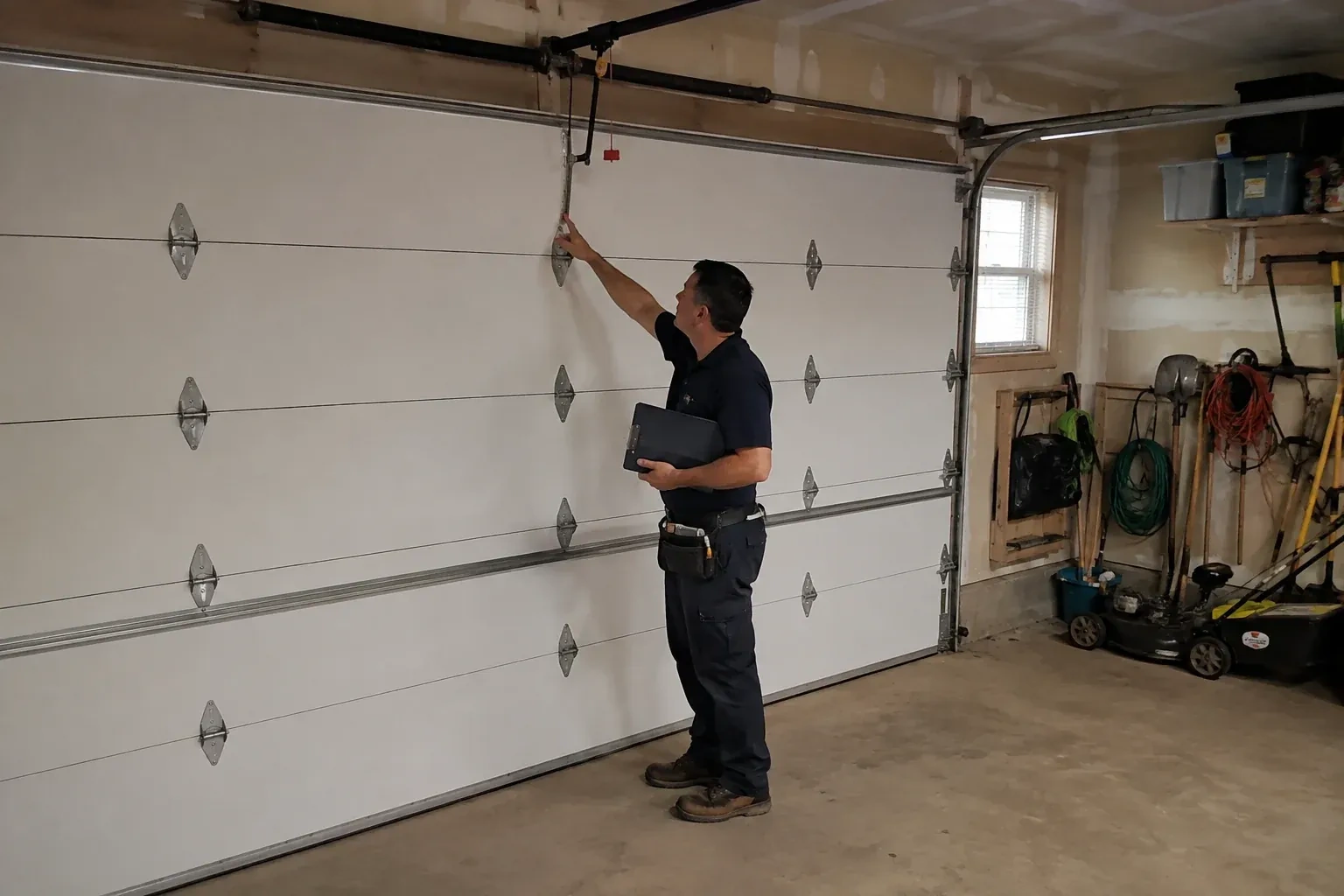
The visit follows a set order. First the technician watches a full cycle, up and down, from a safe distance, noting where the noise, shaking or hesitation lives. Then the door is closed and inspected hardware by hardware, from the bottom brackets to the torsion shaft. The manual release is pulled and the door is lifted by hand to feel the balance. Only then does the work start: fasteners, lubrication, opener adjustments and sensor alignment. A second cycle and the reversal tests close the visit, and the difference between the first run and the last is the measure of the tune-up.
How the visit goesThe door lands with a thud you can feel through the kitchen floor, and sometimes it bounces back up a few centimetres before settling. The bottom section has a small dent where it keeps slamming the concrete.
Burlington
How the visit goes
Feeling the balance by hand
The door is disconnected from the opener with the red release handle, and the technician lifts it by hand, gripping only the handles or a safe edge. A properly balanced door rises with modest effort, stays fully open on its own and holds still when left about a metre off the floor. A door that sinks back down, or that takes real strength to raise, has springs that have lost tension and an opener that has been carrying weight it was not designed for. This check takes a minute and decides more than any other: it tells the technician whether the tune-up can proceed as maintenance or whether spring work needs to be quoted first.
Small adjustments with a big effect
A few minutes of fine adjustment often change the character of a door. A vertical track that has crept inward is eased back so the rollers run in the centre of the channel. A horizontal track that has sagged on its hanger is brought level so the door does not drop into the curve. A strut on a wide top section is checked and tightened so the panel stops flexing when the opener pulls on it. The lock bar is aligned with its slot, or disabled on an opener-driven door so it can never be engaged against the motor. None of these are repairs; they are corrections that let the existing parts work as designed.
Ready for the cold months
After a fall tune-up the door is set up for the season that tests it hardest. The lubricant on the moving parts stays fluid in the cold rather than thickening into a drag on the opener. The bottom seal and jamb weatherstrip have been treated so they stay flexible below freezing and release from the slab instead of tearing. If the seal ever freezes down on a bad morning, free the ice and dry the area before running the door rather than letting the opener force it; that habit protects the top section better than any force setting. You have been shown the threshold spot where water pools, and clearing snow and ice there becomes part of shovelling the driveway.
Garage Door Tune-Up
In the van
- Bottom seal (astragal)
- Silicone spray for seals
- 2x4 test block and tape measure
- Lag screws for brackets and header
- Jamb and header weatherstrip
What affects the quote
Same fees day, night or weekend
1Single or double door
A double-width door has more hinges, rollers and track to inspect and lubricate, a heavier counterbalance and usually a strut or two on the top section, so it takes longer than a single door.
2Season and weather
A winter visit can include freeing a seal frozen to the slab and working with thickened lubricant before the tune-up proper can begin, which adds time to the visit.
3Track alignment
Tightening track bolts is included. A track that has been pulled out of line or dented by a vehicle needs straightening or a section replaced, and that is quoted as its own repair.
Garage Door Tune-Up: questions
Will the tune-up include replacing worn parts?
Small wear items found on the day, such as a roller or a hinge on a middle section, a bottom seal or a few fasteners, can often be replaced during the visit if you agree and the part is on the truck. Larger items, including springs, cables, drums, bottom brackets, a bent track or an opener gear, are written up as separate repairs with their own quote so you can decide with the facts in hand rather than under a raised ladder.
Should I lubricate the tracks?
No. Tracks should be clean and dry. Rollers are meant to roll along the track on their own bearings, and a film of lubricant on the track collects grit, thickens in the cold and makes the rollers slide and drag instead. Wipe the tracks with a rag and put the lubricant where it belongs: on the hinge pins, the roller bearings, the spring coils and the bearing plates at the ends of the torsion shaft.
What is the balance test and why does it matter so much?
With the door closed, the opener is disconnected using the red release handle and the door is lifted by hand. A balanced door rises with modest effort, stays fully open and holds still about a metre off the floor. The springs are meant to carry nearly all the weight so the opener only guides the door. A heavy or sinking door means the opener is lifting weight it was not built to lift, wearing its gear and making the reversal system less reliable.
Repair & Maintenance
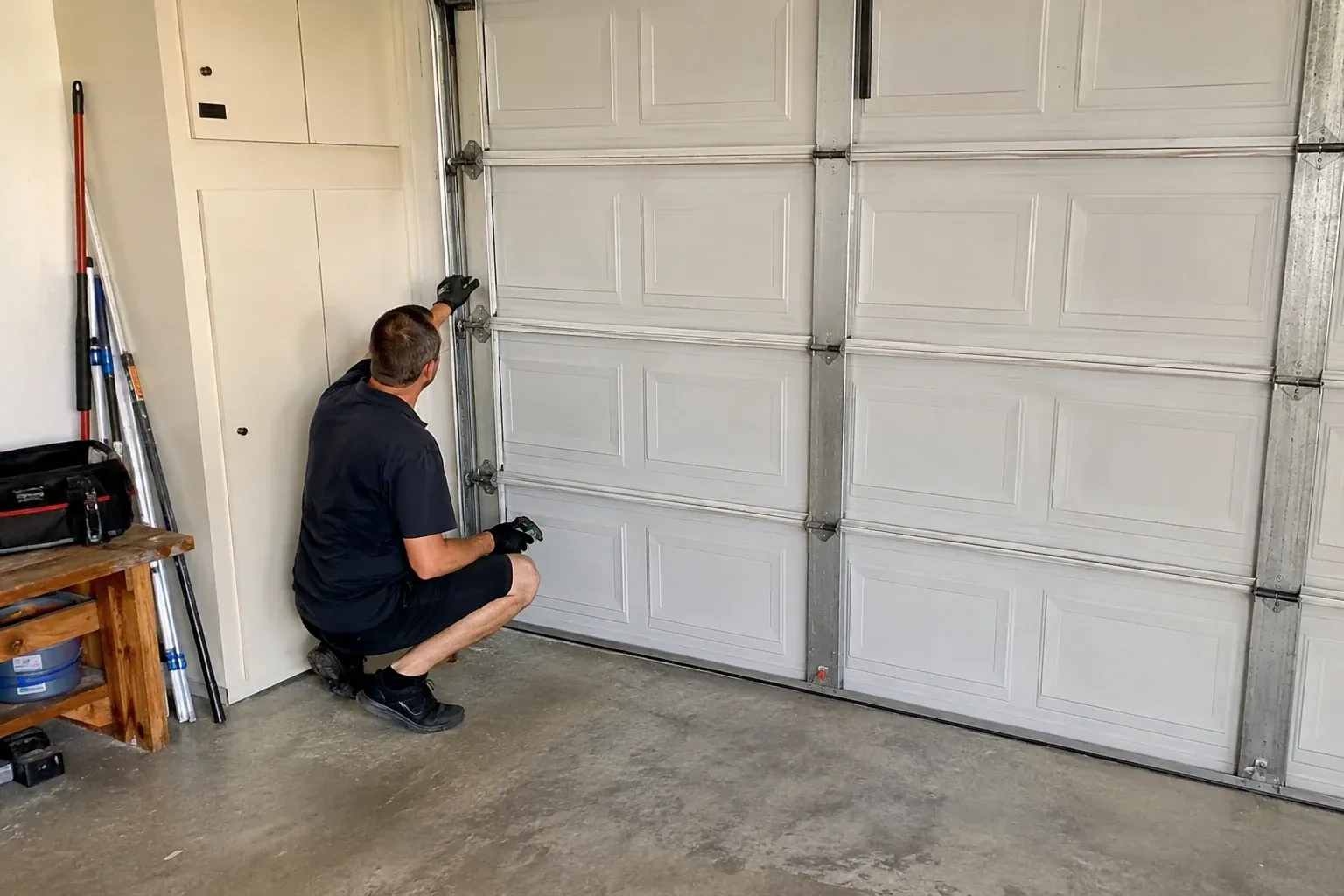
- Off-Track Garage Door ResetThere was a loud bang from the garage, then silence.
- Garage Door Panel ReplacementThe top section has developed a bend where the opener arm pulls on it.
- Garage Door Bottom Seal ReplacementWith the door closed and the lights off, a bright line of daylight runs along the floor from one…
Garage Door Tune-Up near you
We think of garage door work in Burlington as keeping a heavy moving object safe and smooth. That covers spring and cable work, tracks and rollers, opener force and sensor settings, seals against the weather, and complete door replacement when a repair no longer makes sense.