Springs · Burlington
Garage Door Cable Replacement
Your older door has springs along the tracks, and one cable has slipped off its pulley and dangles slack. The door lifts crooked and needs a shoulder to close, when it used to glide.
Garage Door Cable Replacement
In plain words
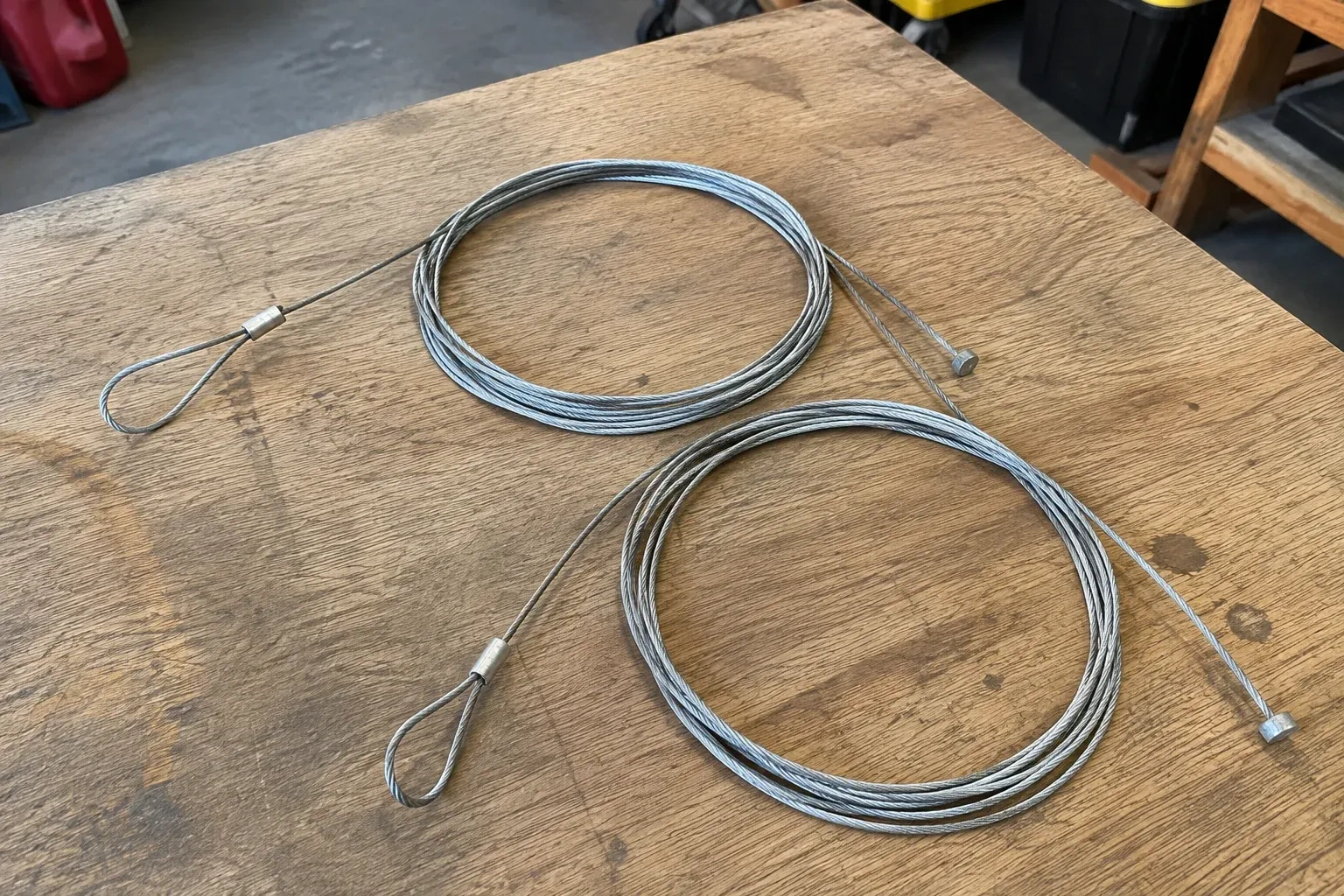
A cable visit runs in a set order. First the opener is disconnected and the door clamped so nothing can move. Then the counterbalance is unloaded so the drums, cables and bottom brackets can be handled calmly. The old cables come off, the drums and brackets are inspected, and new cables of the correct specification go on. Both sides are tensioned evenly until the door sits level, then the springs are wound back to the turns the door height calls for. Finally the door is balanced by hand, the opener reconnected and its travel and reversing checked. You are shown the finished door working before the technician leaves.
How the visit goesThe cable has wrapped itself around the shaft above the door instead of sitting on its drum. When the opener runs, the door lurches, one side rises before the other, and the top panel twists.
Burlington
How the visit goes
Making the door safe to work on
Nothing is touched until the door cannot move. The technician pulls the opener's release cord so the motor is out of the picture, clears the opening, and clamps the track just above a roller or props the door if it is jammed partway. If one cable has let go, the door is probably tipped and binding in the track, with its weight resting unevenly on the remaining cable and spring, so the first job is to take that weight on clamps or a support. Only then does the assessment of drums, springs and brackets begin. This step is calm and deliberate, and it is what allows every later step to be done with both hands.
Balance, travel and the opener
With the springs wound and the clamps off, the technician lifts the door by hand. It should rise with light effort, hold still at roughly waist height, and settle to the floor without slamming; that is the balance test, and the spring turns are adjusted until it passes. The door is run through several full cycles by hand while the cables are watched on the drums. Then the opener is reconnected, its travel limits and force settings are checked against the newly balanced door, and the reversing test with a block under the door and the photo-eye test are carried out. You see each of these done.
Lubrication that helps, and where it does not belong
A few minutes with a can of garage-door lubricant twice a year keeps the whole system easy on the new cables. Spray the torsion spring lightly along its length, the hinge pins, the roller stems and bearings, and the bottom bracket pins, then run the door a few times to spread it. A light mist on the cables themselves slows rust; heavy grease is avoided because it holds grit and moisture. The tracks are left dry and simply wiped clean, since lubricant there collects dirt and lets rollers slide instead of roll. Silicone or a lithium spray made for doors is the right product.
Garage Door Cable Replacement
In the van
- Cable drums, matched pair
- Bottom rollers and hinges
- Winding bars
- Torsion springs and winding cones
- Track clamps or locking pliers
What affects the quote
Same fees day, night or weekend
1Access to the spring shaft
Shelving, storage or a low ceiling around the torsion shaft and drums slows the work. Clearing the area beforehand or a tighter working space both affect the time quoted.
2Worn rollers and hinges found on the way
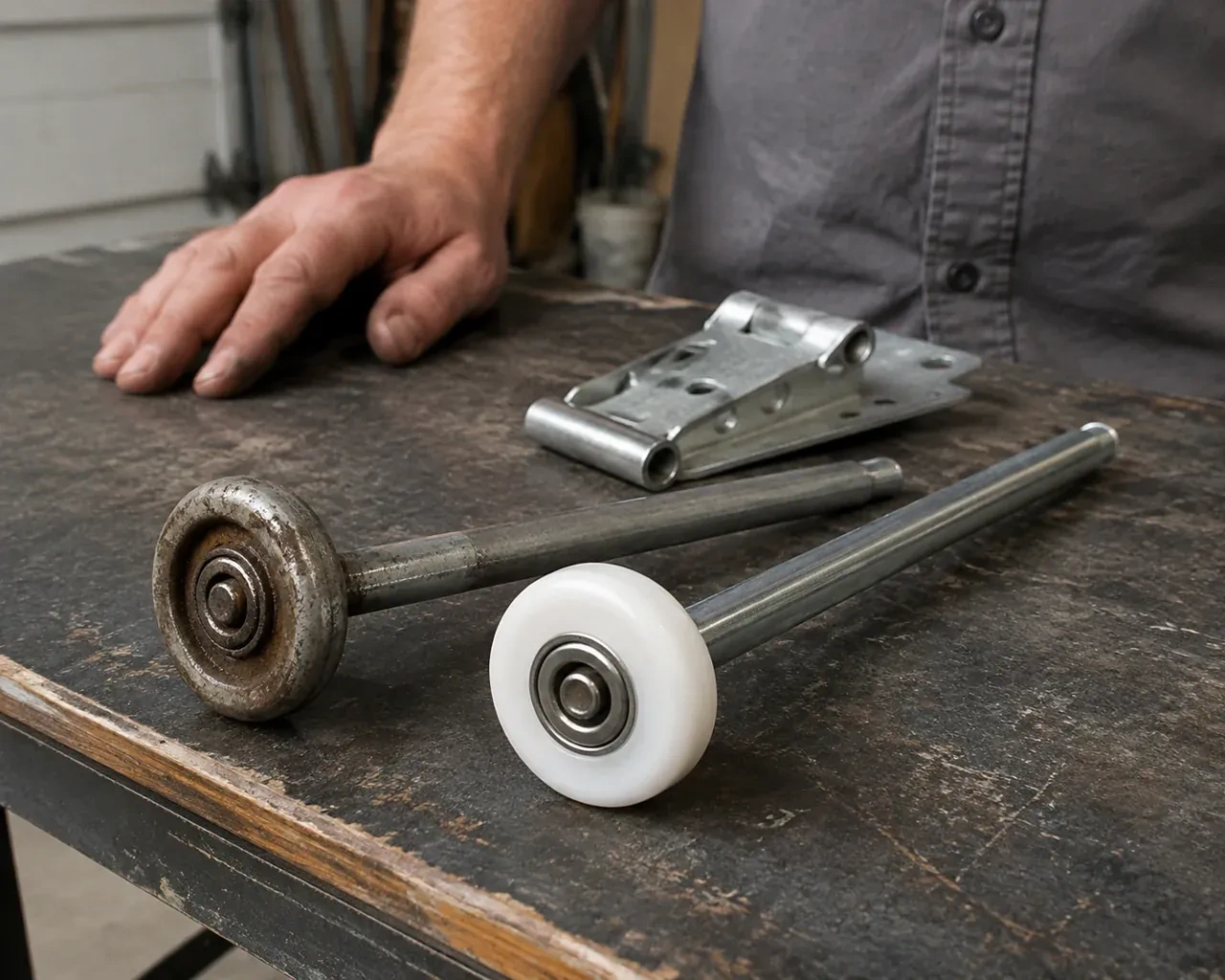
Cracked roller wheels or split hinges seen during the inspection are pointed out and offered as optional items, since replacing them while the door is unloaded is efficient.
3Opener adjustment afterwards
A newly balanced door often needs the opener's travel limits and force settings reset and its reversing tested. That short adjustment is named in the quote when it is needed.
Garage Door Cable Replacement: questions
Why should the bottom brackets never be loosened by hand?
The bottom bracket is where the cable attaches, so whenever the springs are wound it carries a share of the door's weight as tension. Loosening it while the counterbalance is loaded releases that tension all at once. Many manufacturers now fit tamper-resistant fasteners for this reason. The technician unloads the springs first, after which the bracket is just a piece of hardware to unbolt and replace.
Should I keep using the opener until the technician arrives?
It is better to leave the door where it is and use another way in and out. Running the opener against a crooked or cable-slack door tends to tangle the cable further, twist the top section and knock the door out of its track, which adds to the repair. Pull nothing and adjust nothing; simply keep the opening clear and let the technician take it from there.
How do I tell a cable problem from a spring problem?
Look above the door with it closed. A torsion spring that has broken shows a clear gap in the coil, and both cables usually go slack together because nothing is turning the shaft. A cable problem tends to show on one side only: a frayed length, a coil of loose cable, or one corner sitting higher. Either way the technician inspects both, since a weak spring is a common reason a cable fails.
Springs & Hardware
- Garage Door Hinge ReplacementThe car nudged the door on the way in.
- Garage Door Track Repair or ReplacementYou bought the house with a door that sticks near the top of its travel.
- Torsion Spring ReplacementOn a cold morning the remote does nothing useful: the light comes on, the motor turns briefly, the…
Garage Door Cable Replacement near you
We think of garage door work in Burlington as keeping a heavy moving object safe and smooth. That covers spring and cable work, tracks and rollers, opener force and sensor settings, seals against the weather, and complete door replacement when a repair no longer makes sense.