Repairs · Burlington
Garage Door Bottom Seal Replacement
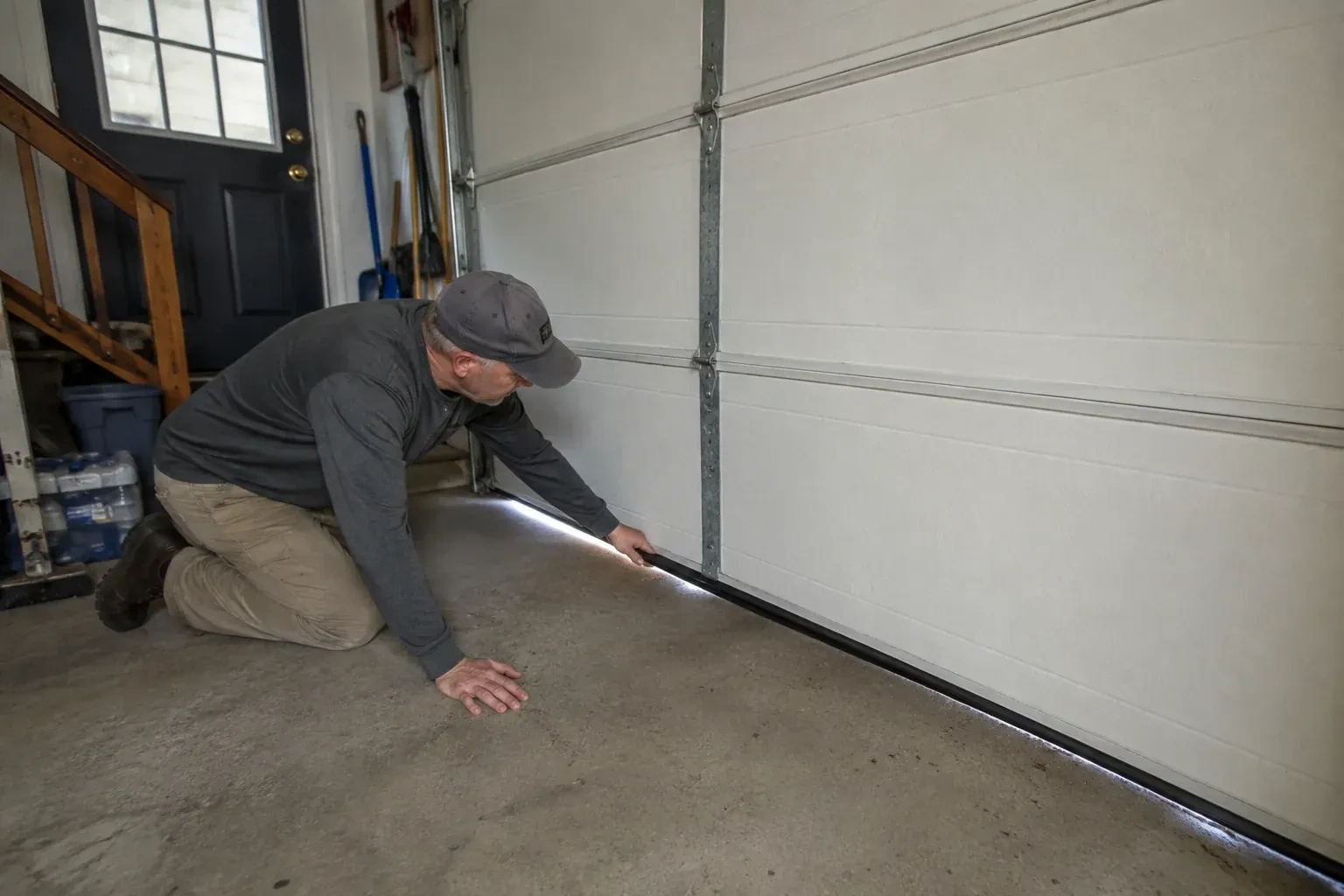
With the door closed and the lights off, a bright line of daylight runs along the floor from one side to the other. Leaves and grit have blown in under it and gathered in a neat drift against the back wall.
Garage Door Bottom Seal Replacement
In plain words
The bottom seal is one part of a weather line that runs all the way round the door. Vinyl-finned stop moulding seals the jambs and header, the section joints have their own tongue-and-groove or shiplap seals, and a threshold seal glued to the floor can meet the bottom strip where a slab slopes the wrong way. Bottom seal replacement addresses the piece that takes the most punishment, and while the technician is there the rest of the perimeter is looked over. Where the side or top strips are torn or shrunk, doing them in the same visit gives a garage sealed on all four edges rather than three.
How the visit goesEvery mild afternoon the snow melts off the car, runs to the door, and by morning the rubber strip along the bottom is frozen to the concrete. Last week the opener lifted the door and left half the seal on the floor.
Burlington
How the visit goes
Why the old seal failed
The old strip is read for its history before it comes off. Cracks along the fold and a chalky surface point to sun and age. A flattened bulb that no longer springs back is compression set. A torn edge at one end usually means the seal froze to the floor and the opener pulled it free. Chew marks say rodents. A strip that has slid partly out of its channel points to a bent or opened retainer, or to a seal that was slightly the wrong size. Each of these leads to a different choice of material, profile or retainer work, so the new seal is spared the fate of the old one.
Cutting the new seal to length
The replacement is cut from a roll to the door width plus a small allowance at each end, using heavy shears or a knife, and the profile is checked against the retainer before any feeding begins. The technician confirms the T or bead edges match the channels and that the bulb height will fill the gap measured earlier without being squashed flat. Where the floor dips at one end, a slightly taller profile is chosen rather than relying on the opener to press harder. Cutting a little long means the ends can be trimmed to the door and finished cleanly once the seal is in.
Keeping the new seal from freezing down
The habit that does the most for a bottom seal in a cold climate is a wipe of silicone spray along the seal face each autumn and again mid-winter. It leaves a film that meltwater struggles to bond to, so the strip lifts off the slab cleanly on a frosty morning. Avoid petroleum-based sprays, which soften vinyl. If the door does freeze to the floor, leave the remote alone: free the seal by hand with gentle warmth from a hair dryer or by working a plastic scraper along the line, then run the door. A minute of patience keeps the new seal whole.
Garage Door Bottom Seal Replacement
In the van
- Self-drilling retainer screws
- Bead-style bottom seal
- Track clamps
- Wire brush and scraper
- Straightedge and tape measure
What affects the quote
Same fees day, night or weekend
1Perimeter seals done together
Jamb and header weatherstripping renewed in the same visit is quoted per length of stop moulding, and doing it alongside the bottom seal saves a second call-out.
2Number of doors
Two single doors are two seals, two inspections and two opener resets. The travel is shared, so doing both in one visit costs less than two separate calls.
3Material chosen
Standard vinyl, cold-flexible rubber and silicone are priced differently. Where the door faces the weather, the technician explains what the step up buys in flexibility and working life.
Garage Door Bottom Seal Replacement: questions
What does a new bottom seal do about water coming in?
It closes the gap between the door and the slab so rain and meltwater meet a continuous barrier. Where the driveway slopes toward the garage, or the slab edge has dipped, the seal alone is working against gravity, and a threshold seal glued to the floor adds a lip that turns water back toward the drive. The technician looks at where the water comes from and recommends the combination that suits your threshold.
How long does a bottom seal last?
Several years is typical, with the range set by exposure. A door facing south or west, a threshold that is wet and salted all winter, and a seal that freezes to the floor a few times a season all shorten the life. A shaded door on a dry slab with a wipe of silicone each autumn can go much longer. The condition of the strip, rather than its age, is what to watch.
How can I tell that the bottom seal needs replacing?
Close the door, turn off the lights and look along the floor from inside. Daylight showing, a strip that feels hard or cracks when pressed, a bulb that has flattened and stays flat, an end hanging out of its channel, chew marks or missing pieces are all signs. So are leaves, snow or a puddle inside the door after weather. Any one of these means the seal has stopped doing its job.
Repair & Maintenance
Garage Door Bottom Seal Replacement near you
We think of garage door work in Burlington as keeping a heavy moving object safe and smooth. That covers spring and cable work, tracks and rollers, opener force and sensor settings, seals against the weather, and complete door replacement when a repair no longer makes sense.