New Doors · Burlington
High-Lift Garage Door Conversion in Burlington
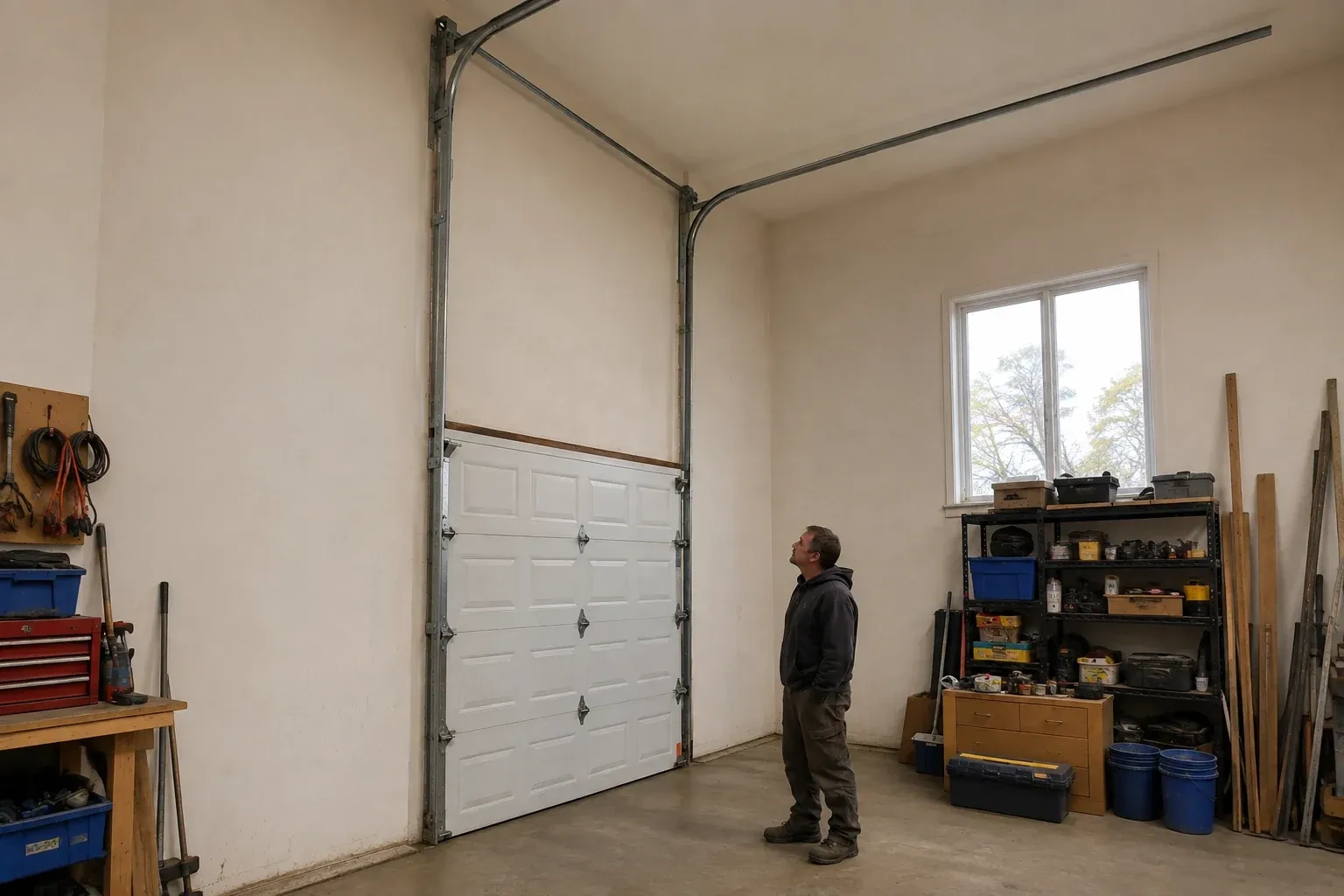
Storage racks were planned near the ceiling, but the existing tracks and centre-mounted opener divide the only practical zone. The wall above the door appears tall enough to move the turning point upward.
High-Lift Garage Door Conversion
In plain words
Good planning defines the finished clearance before installation begins. Measurements capture the opening, ceiling, beams, ducts, lighting, framing, opener and the object that needs room below the raised door. From there, the proposed high-lift dimension is checked against shaft location, spring length, transition radius and backroom. The customer can then see what usable space the conversion is expected to create and which system components are involved. Installation follows that recorded layout, with balance and complete travel tested at the end.
How the visit goesWorkshop equipment is moving in, and the present opener rail and door sections occupy the same overhead zone planned for lighting and clear working space. A different travel path could organize that ceiling area more effectively.
Burlington
How the visit goes
Start with the space you want to use
The first measurement is not the ceiling height; it is the clear zone the finished garage needs. For a vehicle lift, that includes the raised platform, the tallest expected vehicle and working clearance. For a shop, it may be lighting, storage or equipment. The technician marks that target, then compares it with the open door's present lowest point. This outcome-first approach reveals how much extra lift is useful and keeps the layout centred on a real purpose instead of simply placing track as high as the room appears to allow.
Secure the door before changing its geometry
Conversion begins with the door closed, the work area organized and the panels firmly supported. The operator is disconnected from door movement, and the spring system is released through controlled professional procedures. Clamps and lifting equipment keep the door from shifting while loaded components are removed. This deliberate setup gives technicians stable access to tracks, cables, drums and shaft hardware. It also protects the reusable sections and creates a known starting condition for building the new path rather than dismantling parts around an unsupported door.
Simple signs that invite a service check
The handover gives you a reference for normal operation: level travel, consistent cable winding, rollers centred in track and a smooth transition from vertical to horizontal. Arrange a check if the door begins leaning, a cable looks slack or frayed, a roller approaches a track edge, or the operator repeatedly changes sound. Leaving the door in a stable position and keeping the area clear supports an orderly visit. Early observation helps a technician focus on the changed component while the documented conversion remains easy to trace.
High-Lift Garage Door Conversion
In the van
- Transition track sections
- Track and flag brackets
- Centre bearing support
- Calculated torsion springs
- Braced back hangs
What affects the quote
Same fees day, night or weekend
1Access to the elevated work zone
Ceiling height, fixed storage, vehicle lifts and restricted floor space influence the ladders, lifting equipment, staging and labour needed to reach components safely.
2Electrical coordination
A relocated operator may need a suitable power location or revised control wiring, which is identified separately from the mechanical door scope.
3Counterbalance component design
Spring specification, drum profile, cable length, shaft arrangement, bearings and centre supports are calculated around the door and proposed travel rather than priced as isolated pieces.
High-Lift Garage Door Conversion: questions
Can I keep my existing garage door sections?
Sound sectional panels can often remain, subject to inspection. Their construction, reinforcement, hinges, rollers, top fixtures, weight and condition are reviewed for the new travel path. Reusing the door does not automatically mean reusing its track or counterbalance parts, since those components are selected for the changed geometry. The assessment identifies retained and replaced items separately.
Will the conversion make the garage door louder?
A properly aligned system should travel smoothly, although its sound may differ because rollers follow a longer vertical route and the operator arrangement may change. Track spacing, roller condition, hinge movement, spring setup and secure supports all influence noise. Final cycling establishes a normal sound baseline, while care follows the lubrication guidance for the installed door components.
Do the torsion springs change during conversion?
The spring specification is recalculated because track geometry and drum profile change the counterbalance requirement. Door weight, high-lift distance, cable travel, drum dimensions and desired use all inform the selection. Technicians then refine the installed setup through controlled manual-balance checks. Carrying over an old spring solely because it looks serviceable would leave out essential design information.
Installation & Upgrades
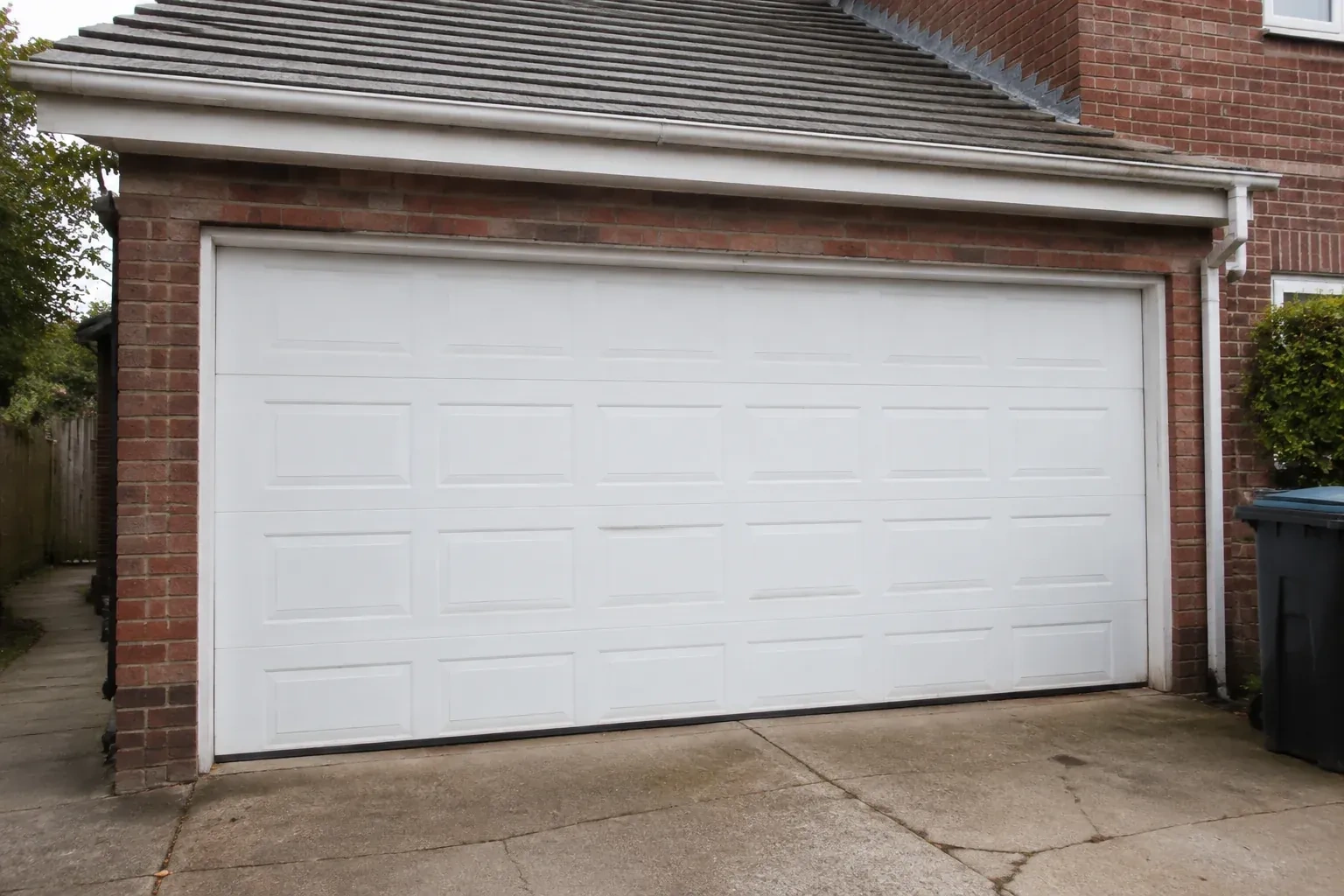
- Insulated Steel Garage Door InstallationThe opener strains as the heavy older door starts upward, and manual movement feels uneven.
- Wind-Rated Garage Door ReplacementYour renovation drawings call for a garage door with a stated design pressure, yet the existing…
- Carriage-House Garage Door InstallationYou appreciate the grain and depth of traditional wood doors, though regular refinishing is not…
High-Lift Garage Door Conversion near you
We think of garage door work in Burlington as keeping a heavy moving object safe and smooth. That covers spring and cable work, tracks and rollers, opener force and sensor settings, seals against the weather, and complete door replacement when a repair no longer makes sense.